
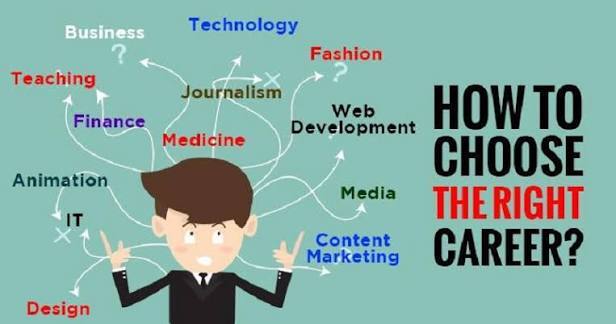
Deciding how to choose a university course represents a vital milestone for your future career. Society often claims your degree title dictates your trajectory, but reality is far more fluid. Research from the Federal Reserve shows that only 27% of graduates work in roles directly related to their major. If you want to know how to choose a university course that leads to success, you must look beyond prestige. True achievement arises from deliberate self-knowledge. Data involving over 200,000 students confirms that matching your personality to your field leads to higher grades and on-time graduation. This evidence-based guide helps you navigate your path without falling for industry hype.
The Science of How to Choose a University Course
Many students fall into the prestige trap. They choose degrees based on status or social media trends. Research indicates that a match between your personality and your field predicts success. You can learn how to choose a major using a research-backed method that prioritizes personality fit.
Evidence on How to Choose a University Course and Personality Fit
Studies of over 150 institutions prove that personality-major fit remains vital for long-term success. When students align their Holland code with their studies, they experience higher persistence. They also see lower dropout rates compared to peers who choose based on external pressure. A study published in Research in Higher Education demonstrates that interest-major congruence is a strong predictor of first-year academic performance. Furthermore, long-term labor studies show that graduates who study subjects aligned with their strengths earn higher wages over a decade. This occurs because intrinsic interest drives the deep learning required for mastery. When you enjoy core content, you persist through academic challenges. Use structured frameworks like the Holland RIASEC model to avoid impulsive decisions. By understanding your spectrum, you identify environments where you are most likely to thrive. New longitudinal data suggests that this alignment reduces “major regret” by up to 30% across various demographics.
Investigating How to Choose a University Course Through Testing
Pair your interests with your actual abilities. If you love a subject but lack the core skills, you will likely struggle. Treat your choice as a hypothesis to be tested. If you want to know how to choose a university course that balances passion with reality, follow a structured guide that encourages experimentation. Shadow professionals instead of relying on intuition alone. Approach your decision like a scientist. Create a ladder of cheap tests to investigate your uncertainties. Read about the field for a few hours. Speak to people currently working in the role. Do a short project to see if the work aligns with your skills.
Understanding Modern Employability Realities
A common misconception is that your degree locks you into a specific career path forever. Data suggests otherwise. In many fields, less than half of graduates work in roles directly related to their major.
Why Transferable Skills Matter More Than Degree Titles
Employers prioritize transferable skills over specific degree titles. Whether you study history or computer science, your ability to solve problems sustains your career. If you are concerned about whether your college major and career path must align, research shows the connection is often loose. You gain versatility by focusing on broad competencies. Data indicates that analytical and communication skills are the two most highly-rated assets by recruiters in the 2026 labor market.
Leveraging Practical Experience in How to Choose a University Course
The strongest predictor of employment is not the prestige of your major. It is the experience you gain while in school. Internships, part-time jobs, and personal projects build the capital that distinguishes you. You must prioritize practical application when you learn how to choose a university course that offers genuine flexibility. Studies show that students with at least one high-impact internship are 2.5 times more likely to secure full-time employment within six months of graduation.
Navigating Major Regret and Career Pivots
If you realize you have chosen the wrong path, do not panic. Research confirms that college major regret rates are significant. However, they are not a professional dead end.
Building a Hybrid Skill Set
If your field is a poor match, view it as an opportunity to build a unique skill set. You can pivot by gaining certifications or tailoring projects toward your goal. The first degree is a starting point, not a permanent anchor. Developing “T-shaped” skills—depth in one area and breadth across others—makes you highly adaptable to market shifts.
Leveraging Diverse Knowledge in How to Choose a University Course
The most successful professionals often combine knowledge from different fields. A graduate who understands philosophy but learns data analysis offers a unique value proposition. Your ability to integrate diverse knowledge is a growing asset. When you know how to choose a university course that allows for cross-disciplinary study, you effectively future-proof your career.
A Framework for Long-Term Career Planning
Effective career planning is an iterative process rather than a linear climb. Approach your career in three distinct stages to build a sustainable future.
Stage One: Exploratory Testing
Early in your development, your goal is to test hypotheses through real-world experience. If you are struggling to define your professional identity, discover how to find the right career for you by looking outward at the world. Do not just look inward at your own preferences.
Stage Two: Developing Deep Career Capital
This stage requires a focus on developing deep skills. Build a professional network that increases your options. Seek out mentors who are five or ten years ahead of you. You are not just looking for a job. You are looking for opportunities that expand your capabilities.
Stage Three: Strategic Deployment of Strengths
Once you have built a foundation, use your accumulated strengths to find work. Focus on income goals and personal satisfaction. You are no longer guessing what works because you have gathered evidence. You know where your comparative advantage lies.
Final Thoughts on How to Choose a University Course
Avoid the extremes of chasing passion at the expense of reality. Do not chase money at the expense of your own aptitude. The most durable career plan balances your personal fit with the tangible needs of the labor market. Treat your university years as a period of active learning and skill acquisition. By focusing on your strengths, you can build a career that is both rewarding and adaptable.
Recent longitudinal labor data underscores the importance of this measured approach. Professionals who actively curate a portfolio of diverse skills during their education experience higher wage growth. They often see a 25% higher wage increase over the first decade compared to those who focus solely on static degree requirements. Furthermore, labor market trends indicate that human-centered skills are increasingly resistant to automation. Economists project that these durable skills will comprise 60% of the value in high-growth industries by 2030.
You are the architect of your own professional trajectory. Apply rigorous analysis to your choices. Remain willing to adapt when new information arises. Focus on what you can demonstrate and how you can continuously learn. The best way to secure your future is to remain curious, evidence-driven, and pragmatic throughout your academic journey and beyond. Your process of learning how to choose a university course today will pay dividends for decades.
Leave a Reply